Before Brick City
The installation filled 800 feet of first floor commercial window space, and took two months to construct. It consisted of cut paper using a brick pattern derived from the building’s façade. The pattern expanded organically across the surface of the windows. Hundreds of images of sculpture of the human figure from discarded art history textbooks populated the brick shaped voids in the paper.
The intent of this artwork was to examine the representation and consumption of knowledge, specifically in the realm of education at a time when the use of books is in radical decline. Familiarity with these artworks through that particular textbook has left me with a broad but finite area of information. I feel involved in each individual artwork, but dulled by the flattened standardized treatment that the textbook presents. This is exacerbated by both the quantity of textbooks I use and their increased obsolescence as the information I teach becomes digital. What value, then, remains of these printed images? And what value can I bring to them? I chose to change them, by repeating, grouping, combining until they became homogenized, chopped into smaller and smaller pieces that created one thoroughly digested and uniform texture. I used this process to examine cultural exchange and appropriation in a diverse society. I wanted these questions to emerge through the gaps in my simulated brick wall as people walked by and absorbed the imagery, but the reaction I got from Spark Academy parents, formalized by the school’s demand that the work be taken down due to images of nude statues* “inappropriate for children to view”, makes it clear that old questions about art’s role in society prevent new questions from being asked.
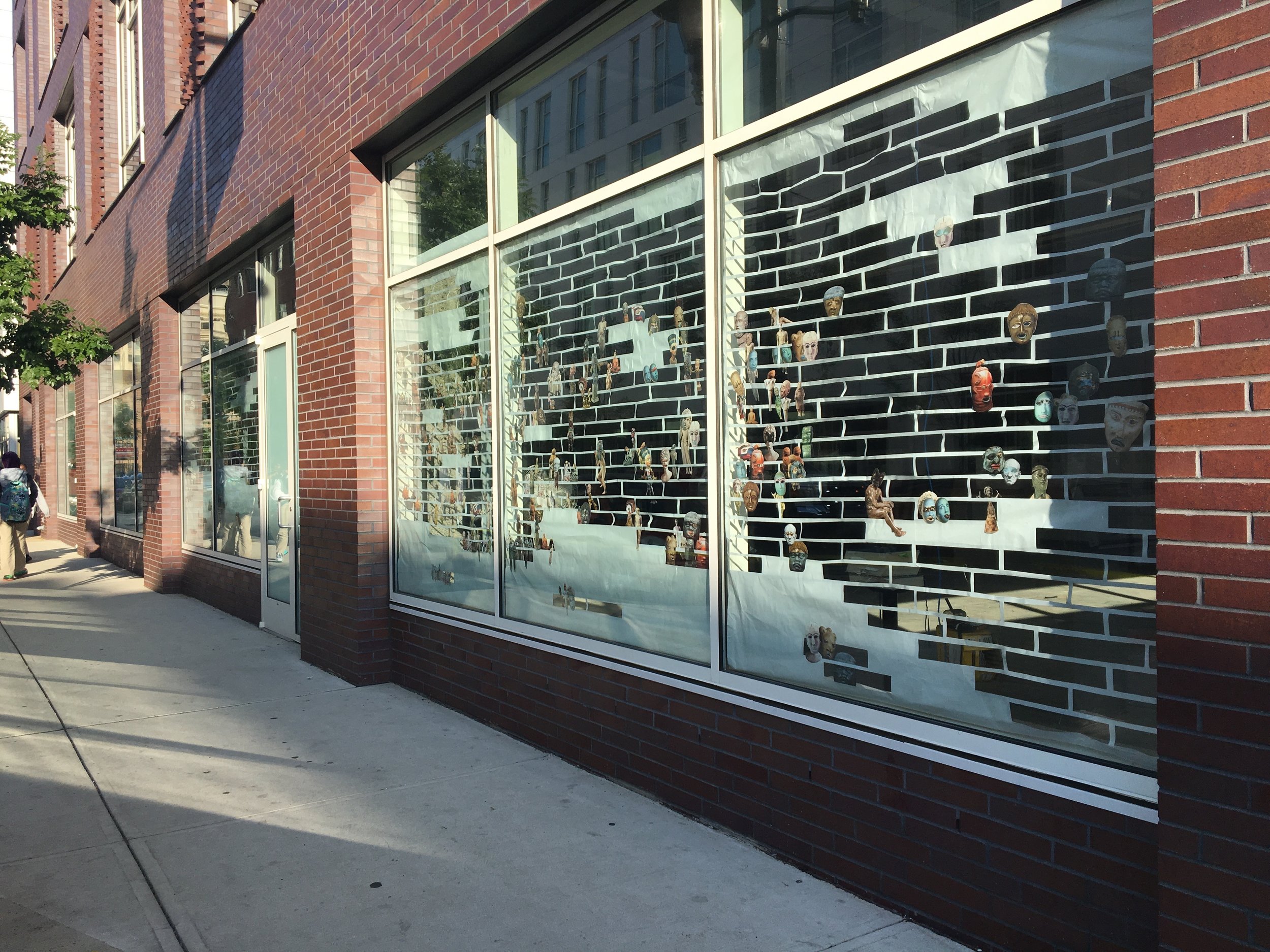
view from corner
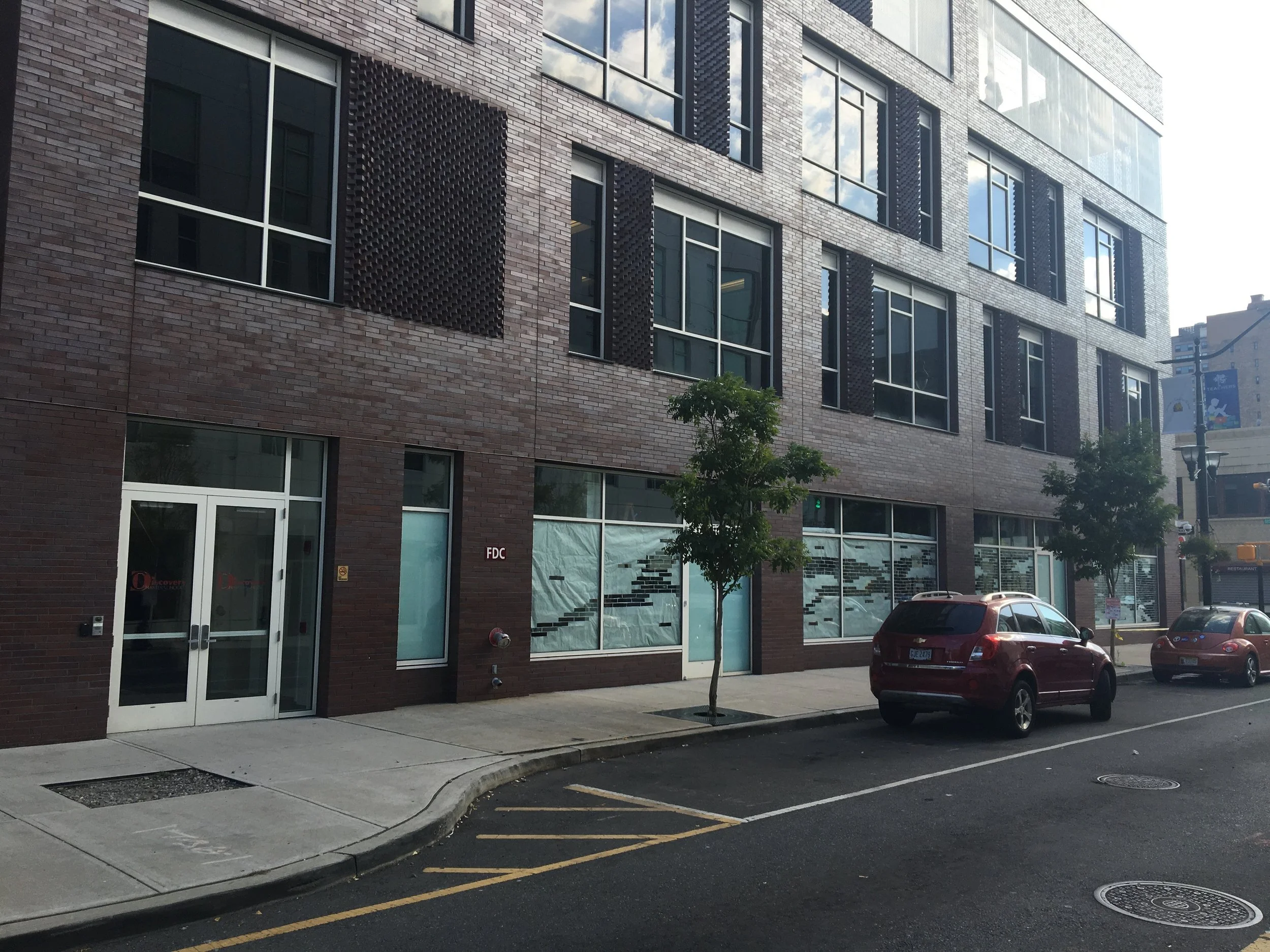
view from across street
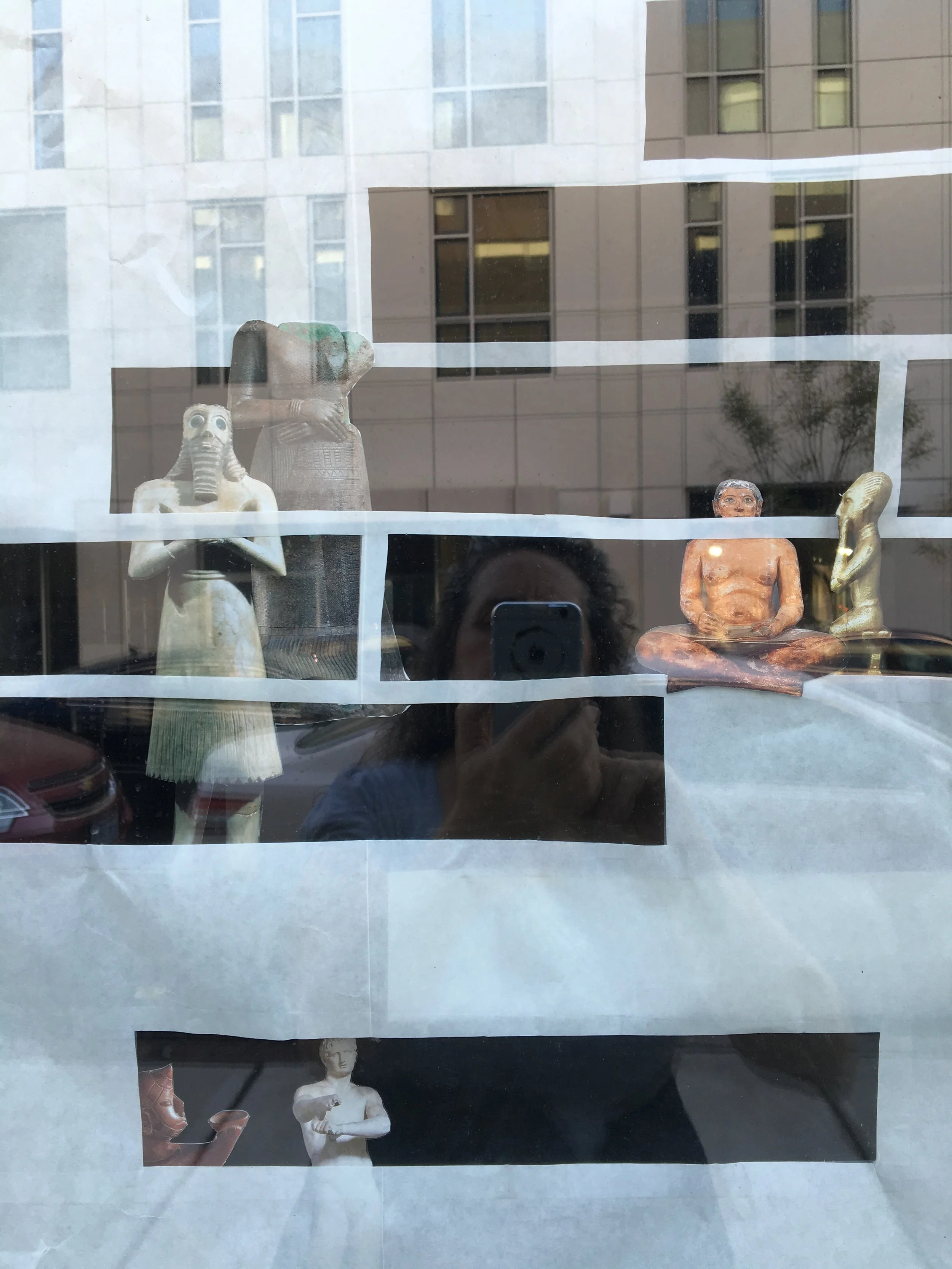
detail, Sumerian and Egyptian figures
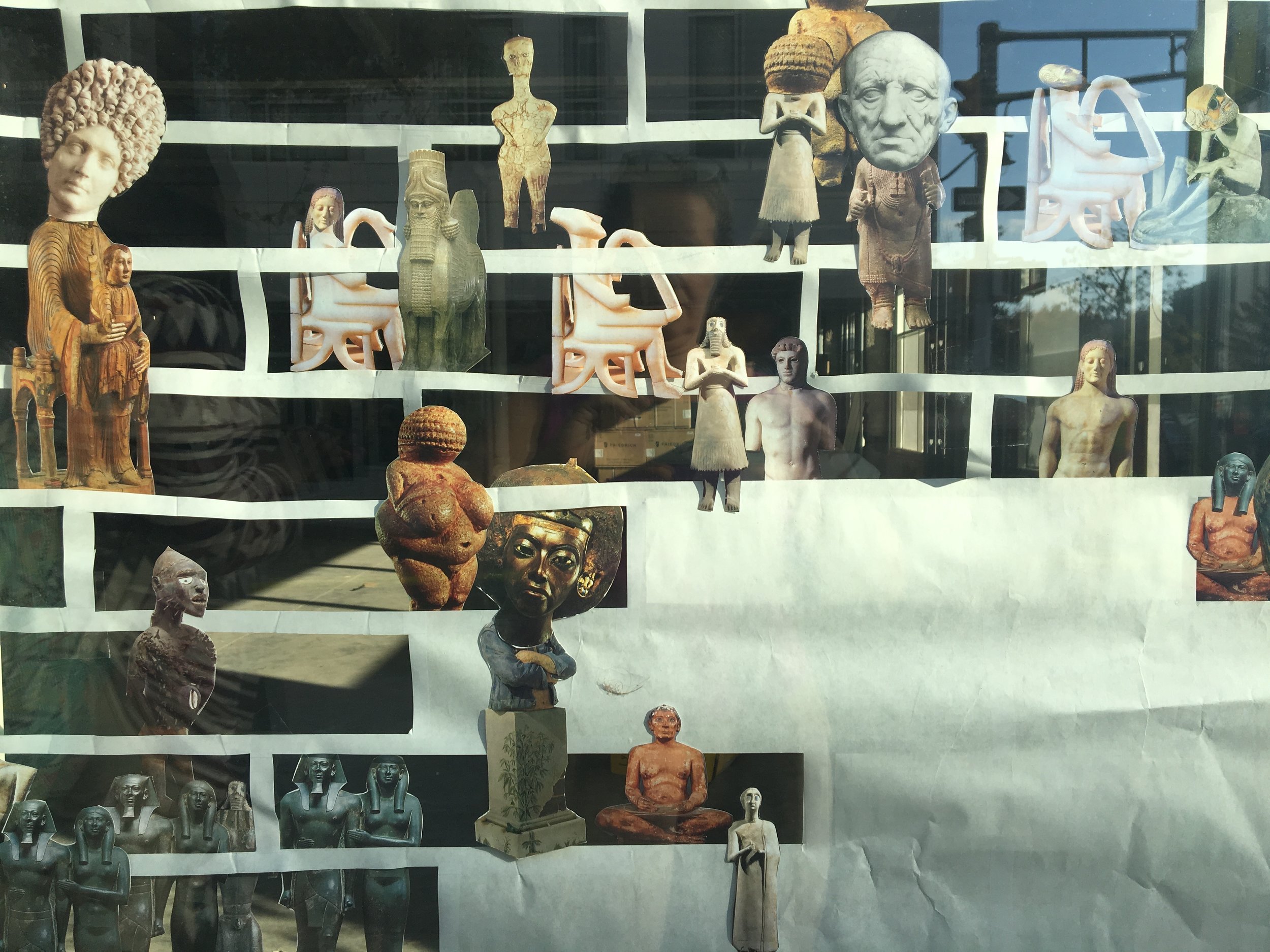
The images were culled from prehistory to contemporary art and from cultures around the world; they made an impressive array of diverse concepts of physical beauty and understanding of the human body throughout history.
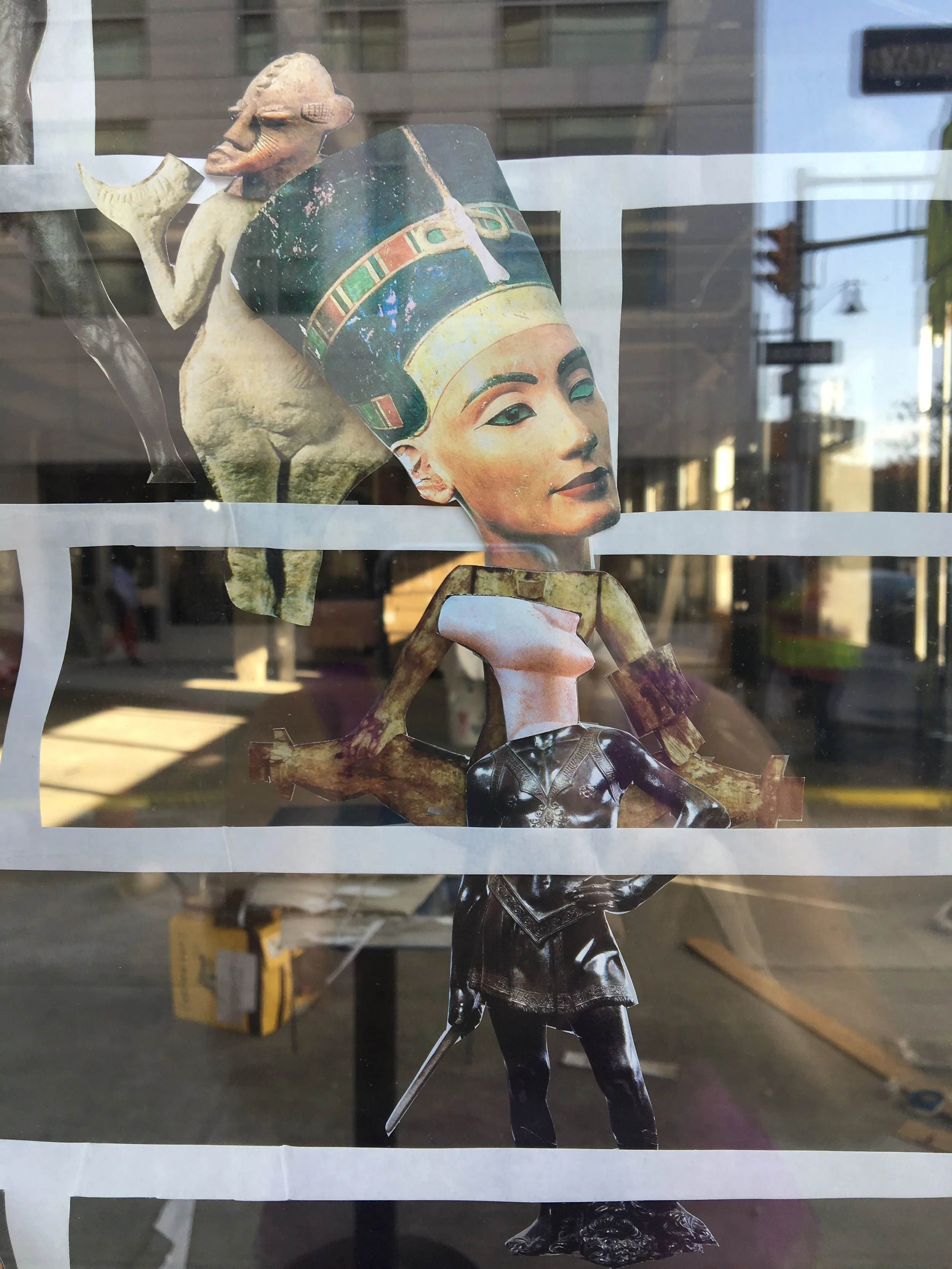
Before Brick City Each image was individually cut out, often appearing again and again, until gradually heads of one figure were attached to bodies of another. As the intermingling of artworks increased across the expanse, individual faces were combined by mixing and matching features from different artworks, until every artwork included had become a new entity.
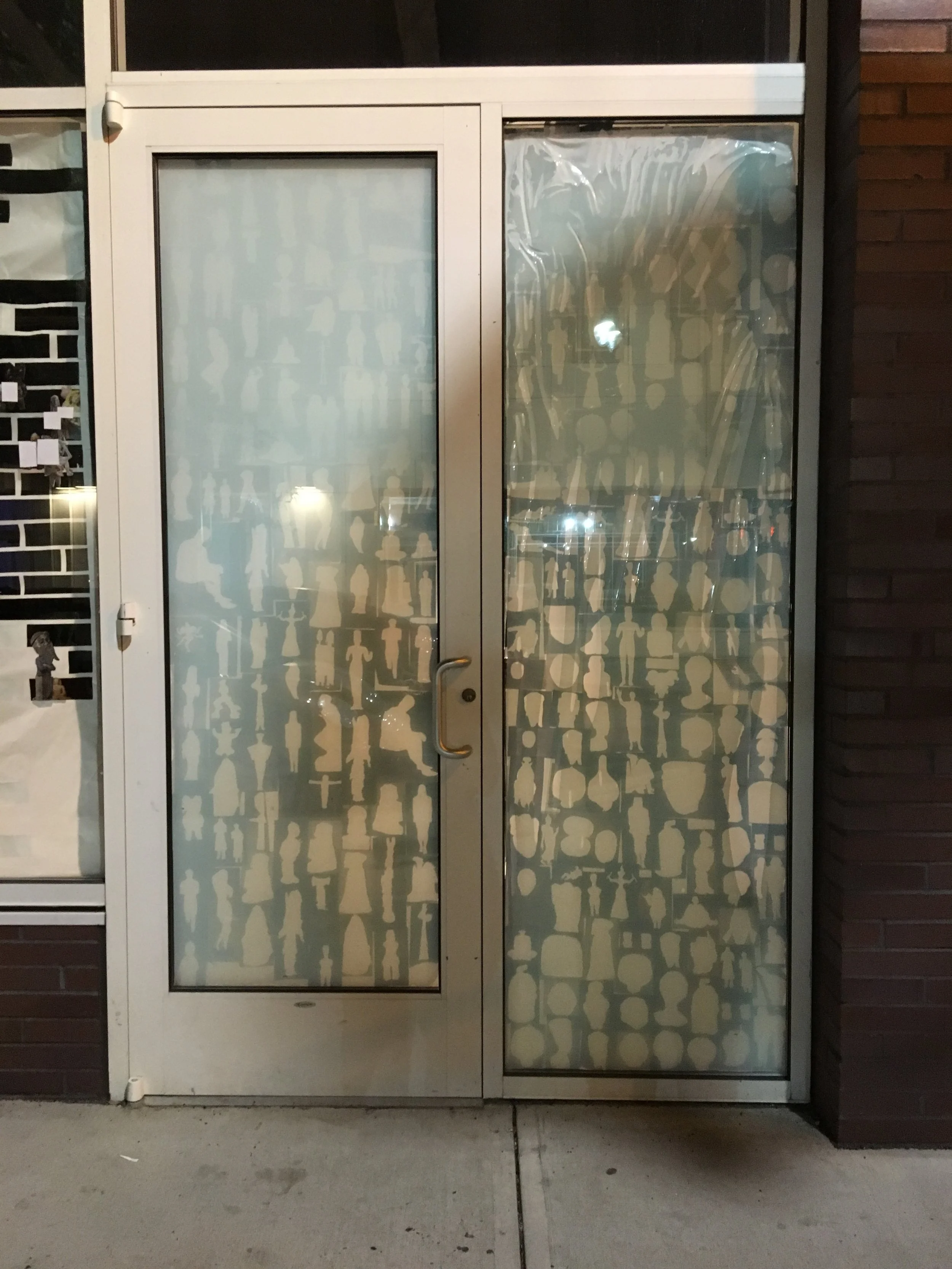
Partially gutted textbooks, the source of these images, stood on pedestals behind the paper construction, their cut leaves gently blowing back and forth. At night, several semi-opaque glass doors were filled with the pages that the artworks were cut from, the shadows of the removed silhouettes backlit and fluttering.
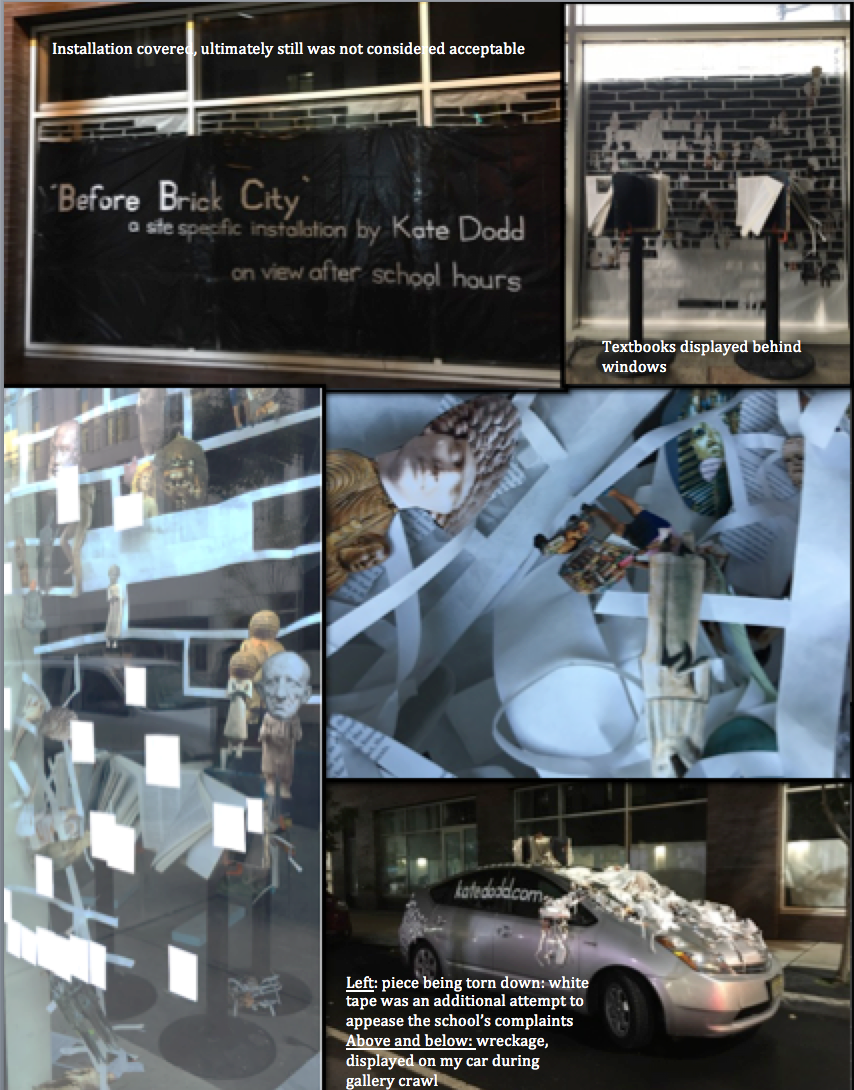
Before Brick City” was censored by a tenant in the building, KIPP Spark Academy, a charter school. Despite multiple attempts to prevent its removal on my part, and others in Newark’s art scene, it was torn down Friday, 10/21, at 4:30 pm, 30 minutes prior to the Newark Open Doors Citywide Art Festival Friday Night Gallery Crawl. Needless to say, I was angry and heartbroken.